
Part 2 : How do we cover Mental Health?
Your mind needs care too
Mental Health Disturbances:
Understanding Conditions, Expectations, and the Silent Pressure of Modern Life
Introduction: Why Mental Health Demands Explicit Attention
Mental health is no longer a hidden or secondary concern—it is a central pillar of human well-being. In today’s fast-paced, competitive, and comparison-driven society, mental health disturbances are increasing at an alarming rate. These disturbances do not arise suddenly; they develop gradually due to emotional overload, unrealistic expectations, social conditioning, and internalized pressure.
Mental health is not merely about happiness or sadness. It is about balance—a balance between thoughts, emotions, responsibilities, expectations, and capabilities. When this balance is disturbed, the mind enters a state of dysfunction that can manifest as anxiety, depression, fear, insomnia, confusion, and emotional instability.
Mental Health: Condition or Disease?
One of the most misunderstood aspects of mental health is whether it should be considered a disease or a condition.
In reality, mental health disturbances exist on a spectrum. Some are conditions caused by lifestyle, stress, and emotional overload, while others develop into clinical disorders. Both require attention, understanding, and timely intervention.
Mental health must be spoken about openly. Silence worsens symptoms. Awareness creates healing. Whether it is anxiety, depression, phobias, illusions, insomnia, or disturbed dreams, these are not signs of weakness—they are signs of imbalance.
The Concept of Disturbance Mode
The human mind functions optimally when it is in balance. However, when stressors exceed coping capacity, the mind enters what can be described as “disturbance mode.”
In this state:
- Thought processes become chaotic
- Emotional responses become exaggerated
- Logical reasoning weakens
- Fear dominates decision-making
When a system is disturbed, it does not need suppression—it needs repair and rebalancing. The greater the disturbance, the more conscious effort is required to reverse it.

Common Mental Health Conditions Created by Imbalance
Several mental health conditions commonly arise due to prolonged imbalance:
- Anxiety disorders: Constant worry, fear, and anticipation of negative outcomes
- Depression: Persistent sadness, loss of motivation, and emotional numbness
- Phobias: Irrational fears created by conditioning
- Illusions and distorted thinking: Unrealistic interpretations of reality
- Insomnia: Sleep disturbances caused by mental overload
- Disturbed dreams: Reflection of unresolved mental stress
These conditions are not isolated; they often coexist and intensify one another.
When Mental Health Goes Unnoticed
As long as a person is:
- Living a routine life
- Engaged in work
- Functioning socially
Mental health issues often remain unnoticed. People assume that everything is normal.
Problems arise when individuals enter competitive environments—academics, careers, social comparison, or societal expectations. Comparison becomes the trigger point. The moment a person begins to measure their worth against others, dissatisfaction and self-doubt begin.
Comparison and the Rise of Expectations
Comparison leads to expectations, and expectations, when unchecked, become psychological pressure.
Once comparison begins:
- Self-worth becomes percentage-based
- Success becomes externally defined
- Fear of failure increases
- Internal peace diminishes
Expectations gradually rise beyond natural capacity, creating chronic mental strain.
The Child and the Percentage Trap: A Simple Example
Consider a child who consistently scores around 70%. The child is:
- Studying regularly
- Emotionally stable
- Happy with learning
Parents initially accept this and remain satisfied.
However, as the child grows older—especially when board examinations approach—expectations suddenly shift. The same parents now demand 90% or more. This shift is not based on the child’s natural ability, but on societal pressure, fear of the future, and comparison with others.
Creation of a New Standard
This gradual increase in expectation becomes a new standard. Parents begin to believe that anything below 90% is failure.

The child is given targets, models, and comparisons:
- “You must score more”
- “Your future depends on this”
- “You need admission in a reputed college”
- “You must become a doctor or engineer”
These statements, repeated over time, deeply condition the child’s mind.
The Illusion of Board Examinations
A powerful illusion is created around board examinations, especially the 10th standard. Society portrays this single examination as a life-deciding event.
This illusion ignores an important reality:
- A child scoring 70% for years cannot suddenly jump to 90% without immense stress
- Capacity does not change overnight
- Pressure does not create intelligence—it destroys balance
Yet, pressure continues.
Ignoring the Child’s Mental Capacity
Parents often fail to ask:
- What is my child’s mental capacity?
- What is the emotional cost of this pressure?
- Is this expectation realistic?
The child, who was once confident and content, now becomes fearful, confused, and overloaded.
The Beginning of Mental Disturbance
By the time the child reaches 10th standard, several symptoms begin to appear:
- Depression
- Confusion
- Fear of failure
- Emotional instability
The child tries harder, studies longer, listens to parents, teachers, and society, yet remains trapped.
The mind repeatedly asks:
“How do I increase my percentage by 20%?”
This single thought dominates the child’s mental space.
Overload and Lifestyle Breakdown
Mental overload disrupts basic biological rhythms:
- Loss of appetite
- Irregular eating habits
- Sleep disturbances
- Fatigue and weakness
The child cannot maintain a scheduled life. Physical health begins to decline because mental energy is constantly consumed by fear and pressure.

Hyperactivity and Emotional Instability
Mental disturbance does not always appear as silence. Sometimes, it manifests as:
- Hyperactivity
- Irritability
- Anger over small issues
- Restlessness
In an attempt to remember more, the child forgets more. Memory declines because the mind is in a constant state of confusion.
Cognitive Confusion and Forgetfulness
When the mind is overloaded:
- Focus decreases
- Retention weakens
- Recall becomes difficult
This creates a vicious cycle:
- Poor performance → more pressure → more confusion → worse performance
Physical Consequences of Mental Stress
Mental health directly affects physical health.
Due to prolonged stress:
- Appetite reduces
- Digestion weakens
- Body weight decreases
- Immunity lowers
The child begins to weaken physically, not due to lack of effort, but due to mental exhaustion.
Diversion of Mental Energy
All mental energy becomes focused on one fear:
“I must score more.”
This tunnel vision deprives the child of creativity, curiosity, joy, and emotional safety.
Mental Health, Pressure, and the Silent Crisis of Modern Life
Introduction: Our Explicit Concern for Mental Health
Mental health has emerged as one of the most critical yet most misunderstood aspects of human well-being in today’s fast-paced and competitive world. While physical diseases are often visible and measurable, mental health conditions operate silently, gradually disturbing the balance of the mind. Anxiety, depression, phobias, insomnia, illusions, disturbed dreams, and emotional instability are no longer rare conditions; they are increasingly common experiences across all age groups.
Mental health is not merely about the absence of disease. It is about balance, clarity, emotional stability, and the ability to live life without constant internal disturbance. When the mind enters a state of imbalance, repair becomes necessary. The more prolonged the disturbance, the greater the effort required to reverse it. Unfortunately, modern society often ignores early signs of mental imbalance until the damage becomes deep-rooted.
This article explores how mental health disorders are often created, not born, through unrealistic expectations, constant comparison, social pressure, and a competitive mindset—particularly in children and students. It also highlights how neglecting emotional capacity and individuality leads to long-term psychological consequences.
Understanding Mental Health as a Condition and a Disease
Mental health must be understood both as a condition and, in severe cases, as a disease. A condition refers to a temporary or situational imbalance of the mind, while a disease reflects a prolonged and untreated disturbance that begins to affect daily functioning.
Conditions such as basic anxiety, mild depression, phobias, insomnia, disturbed sleep, and recurring negative thoughts are often created by environmental and psychological factors. These conditions do not arise suddenly. They are gradually formed through repeated stress, unmet expectations, fear of failure, and emotional overload.
As long as an individual is living a normal life—working, interacting, and functioning without major distress—there may appear to be no issue. However, the problem begins when the person enters a state of constant comparison, competition, and internal pressure. At that point, expectations rise unnaturally, and mental disturbances start to take shape.

The Role of Comparison in Creating Mental Disturbance
One of the most destructive habits of modern society is comparison. Comparison silently shifts the mind into a state of inadequacy. The moment a person begins to compare their achievements, lifestyle, income, or abilities with others, the mind enters what can be called “comparison mode.”
In this mode, expectations rise sharply. A person no longer evaluates themselves based on their own capacity or growth but instead measures worth through external benchmarks. This creates a constant sense of lack—something is always missing, always insufficient.
This comparison-based mindset is not limited to adults. It is deeply ingrained in children at a very young age, particularly through academic pressure and social expectations. What begins as motivation soon turns into fear, anxiety, and emotional overload.
A Simple Example: The Child and Academic Pressure
To understand how mental health issues are created, consider a simple and common example involving a child and academic performance.
When a child is young and scores around 70% in school, parents are often satisfied. The child is happy, studies comfortably, and lives without fear. There is balance. The child eats well, sleeps well, plays, and studies according to their natural capacity.
However, as the child grows older and approaches higher grades—especially board examinations such as the 10th standard—the expectations begin to change. Suddenly, 70% is no longer acceptable. Parents start expecting 90% or more. The reasoning is often rooted in fear: fear about the child’s future, career, college admission, and social status.
This shift in expectations happens gradually, but its impact on the child’s mental health is profound.

The Illusion of Board Examinations and Social Fear
Society has created a powerful illusion around board examinations, particularly the 10th standard. There is a widespread belief that a child’s entire future depends on these marks. This belief is repeatedly reinforced by parents, teachers, relatives, and society at large.
The child is told that unless they score exceptionally well, their career will be ruined. They are made to believe that only doctors, engineers, or high-status professionals are successful. As a result, academic performance becomes directly linked to self-worth.
This illusion ignores one critical factor: the child’s natural mental and emotional capacity. A child who has consistently performed at an average level for years cannot suddenly be expected to jump 20% without consequences. The pressure to force such improvement often damages the child’s mental health rather than enhancing performance.
When Expectations Exceed Capacity
Every individual has a unique capacity—mental, emotional, and intellectual. When expectations align with capacity, growth is healthy. When expectations exceed capacity, stress and confusion arise.
In many cases, parents unknowingly push children beyond their limits. They create targets without understanding whether the child has the internal ability to meet them. The child, wanting to please parents and society, tries harder—but effort alone cannot compensate for emotional overload.
This is where the real problem begins. The child becomes confused, anxious, and internally conflicted. They do not know how to bridge the gap between expectations and reality. This internal conflict slowly transforms into mental disturbance.
The Gradual Onset of Depression and Anxiety in Children
Initially, the child may appear normal. They study more, attend extra classes, follow instructions, and try to meet expectations. However, internally, stress accumulates.
Over time, signs of mental health disturbance begin to appear. The child becomes anxious, fearful, and emotionally sensitive. Sleep patterns are disturbed. Appetite reduces. The child may stop eating properly or lose interest in food altogether.
Thoughts become repetitive and obsessive. The child constantly thinks about marks, performance, and failure. Even during rest, the mind does not relax. This continuous mental engagement leads to exhaustion.
Eventually, the child may slip into depression—feeling confused, helpless, and emotionally numb.
Behavioral Changes: Anger, Hyperactivity, and Confusion
Mental overload does not remain limited to thoughts. It manifests in behavior.
Children under excessive pressure often become irritable and angry over small matters. Minor issues trigger disproportionate emotional reactions. This is not misbehavior; it is a sign of internal disturbance.
In an attempt to remember more, the child may start forgetting things. Memory weakens because the mind is overloaded. Confusion increases, concentration decreases, and performance may actually decline despite increased effort.
This creates a vicious cycle. Poor performance leads to more pressure, which further damages mental health.

Physical Consequences of Mental Disturbance
Mental health and physical health are deeply interconnected. When the mind is disturbed, the body suffers.
Children experiencing mental stress often lose appetite. Digestion becomes weak. The body does not receive proper nutrition. Sleep disturbances further weaken physical strength.
As a result, the child becomes physically weak and fatigued. Immunity may reduce, leading to frequent illness. The child’s overall growth—both mental and physical—is compromised.
This clearly shows that mental disturbance is not an isolated issue; it affects the entire system.
The Silent Nature of Mental Health Damage
One of the most dangerous aspects of mental health issues is their silent progression. Unlike physical injuries, mental disturbances are not easily visible.
Parents may assume that pressure is necessary for success. Teachers may believe that strictness improves performance. Society may normalize stress as part of growth. Meanwhile, the child suffers quietly.
By the time clear symptoms appear, the damage may already be deep-rooted. Repairing mental health at this stage requires significantly more effort, time, and support.
Rethinking Success, Growth, and Expectations
True growth does not come from pressure; it comes from balance. Success is not defined by percentages, ranks, or comparisons. It is defined by emotional stability, clarity of thought, confidence, and well-being.
Children must be allowed to grow according to their natural capacity. Encouragement should replace pressure. Guidance should replace fear. Understanding should replace unrealistic expectations.
When mental health is protected, learning becomes joyful rather than burdensome. Performance improves naturally when the mind is calm and focused.
Conclusion: Protecting Mental Health as a Priority
Mental health disturbances such as anxiety, depression, phobias, and insomnia are often created by society itself. Unrealistic expectations, constant comparison, and fear-based motivation slowly disturb the mind’s balance.
Especially in children, academic pressure without emotional understanding leads to confusion, stress, behavioral changes, and physical weakness. What starts as an attempt to secure a better future often results in long-term psychological harm.
Mental health must be treated as a priority, not an afterthought. Early awareness, balanced expectations, and emotional support can prevent many mental health conditions from developing into serious disorders.
A healthy mind creates a healthy life. When we protect mental health, we protect the future itself.

The Burden of Wanting to Make Parents Happy
A very common thought that arises in the mind of a child or student under pressure is: “How can I get a higher percentage? What more effort should I make so that my parents are happy?” At first glance, this thought appears noble and responsible. However, when examined deeply, it often becomes the starting point of mental illness.
The burden does not arise from effort itself, but from emotional compulsion. The child no longer studies for learning or self-growth but studies to satisfy expectations. The mind becomes overloaded with fear of disappointing parents, teachers, and society. Slowly, the child begins to lose connection with their own emotional needs and capacity.
This is the stage where one must pause and ask an important question: Have we ever reflected on ourselves to identify the root cause of this pressure?
The Root Cause: Unwanted and Unrealistic Expectations
In most cases, the root cause of mental disturbance is unwanted expectations. These expectations may come from parents, society, relatives, schools, or even from the individual themselves. Expectations that are not aligned with one’s capacity slowly poison the mind.
When expectations rise continuously without emotional support, stress becomes chronic. The mind starts believing that worth depends only on achievement. This belief is extremely dangerous, especially for young minds.
Learning to be happy and learning to stay satisfied are among the most powerful remedies for mental health. There is no greater medicine than a balanced mentality. A calm and content mind has a natural ability to heal itself and maintain health.
Gratitude and Perspective: A Powerful Mental Medicine
One of the simplest yet most effective practices for mental well-being is gratitude. When a person feels mentally disturbed, they should consciously think of people who are less fortunate.
When we compare ourselves with those who have fewer resources, fewer opportunities, or poorer health, perspective changes. A sense of gratitude develops naturally. Thoughts such as “I already have so much; many people do not even have this” bring emotional relief.
Gratitude towards nature, life, and a higher power—whether one calls it God or universal energy—creates emotional stability. A grateful mind is less likely to fall into depression or anxiety.
Positive Thinking vs. Overthinking
Often, people advise children to “think positive” and “dream big.” While positive thinking is beneficial, it must not be confused with unrealistic overthinking.
Every coin has two sides. Similarly, positive thinking and excessive mental processing are very different. Positive thinking encourages hope and confidence, whereas overthinking increases anxiety. When the mind constantly evaluates outcomes, fears failure, and imagines worst-case scenarios, anxiety levels rise.
Many children and teenagers fall into depression not because they think too little, but because they think too much without emotional balance.
When Pressure Reduces Performance Instead of Improving It
A common misconception is that pressure improves results. In reality, excessive pressure often does the opposite.
A child who was consistently scoring around 70% may gradually drop to 50% under extreme stress. The goal of 90% moves further away instead of closer. When this happens, criticism and scolding increase, further damaging the child’s self-esteem.
The child begins to believe, “I am the culprit. I have done something wrong.” This self-blame slowly turns into depression. Loneliness increases. Emotional withdrawal begins.

Sleep Disturbances and the Rise of Insomnia
One of the earliest signs of mental disturbance is disturbed sleep. Children and teenagers under stress often suffer from insomnia.
The mind remains active even at night, replaying fears, expectations, and failures. Lack of sleep further weakens emotional regulation and concentration. Over time, insomnia becomes chronic, worsening anxiety and depression.
In severe cases, mental exhaustion combined with insomnia pushes individuals towards extreme thoughts, including suicidal ideation or attempts. This is one of the most tragic outcomes of untreated mental pressure.
Phobias, Fear Conditioning, and Childhood Imprinting
Another major contributor to mental health conditions is fear conditioning during childhood. Many fears are planted early through rigid customs, cultural threats, and religious warnings.
Children are often told that if they perform certain actions, something bad will happen. They are taught concepts of sin, punishment, and fear without emotional explanation. These ideas are repeatedly dumped into the subconscious mind.
Although these fears may not be real, the mind accepts them as truth. Even when the child grows up and intellectually understands that these fears are irrational, the emotional imprint remains.
How Phobias Grow With Age
Phobias rarely disappear on their own. As a person grows older, unaddressed fears evolve and intensify. Fear becomes a constant background emotion.
Such individuals struggle with confidence. Decision-making becomes difficult. The mind remains stuck in fear-based thinking. Living happily becomes challenging.
This continuous state of fear is itself a mental health condition. The individual is physically present but mentally trapped.
Self-Created Mental Conditions
When we examine mental health honestly, we must accept an uncomfortable truth: many mental conditions are created by us or by our environment.
Unrealistic expectations, fear-based upbringing, emotional neglect, comparison, and pressure account for a majority of mental health issues. In more than 95% of cases, these conditions are not sudden or unavoidable; they develop gradually.
Acknowledging this is not about blaming oneself—it is about empowerment. If a condition is created, it can also be corrected.

Trauma, Abuse, and Exceptional Cases
It is important to acknowledge that not all mental health disturbances are self-created. There are exceptional cases involving trauma, abuse, or violence—especially among women and young girls.
Such experiences deeply disturb mental health and are not the result of personal expectations or thinking patterns. These cases require sensitive handling, professional support, and long-term healing.
However, these situations form a smaller percentage compared to the vast number of pressure-induced mental conditions.
Conditions vs. Diseases in Mental Health
Mental health issues can broadly be divided into two categories: conditions and diseases.
Conditions are often created by lifestyle, upbringing, and environment. They are reversible with awareness, emotional correction, and behavioral changes.
Diseases, on the other hand, have a biological or genetic basis. These include disorders such as bipolar disorder, obsessive-compulsive disorder (OCD), hysteria, autism spectrum disorders, and certain forms of severe depression.
Genetic and Neurological Disorders
Some mental health diseases are passed down through generations. These are genetic in nature and involve neurological dysfunction.
In such cases, neurons do not function optimally. Chemical imbalances in the brain affect mood, behavior, and cognition. These conditions cannot be addressed through mindset changes alone.
They require structured therapy, medical intervention, behavioral therapy, and in many cases, long-term or periodic medication.

Treatment, Therapy, and Acceptance
For disease-based mental disorders, professional treatment is essential. Therapy helps individuals understand their condition, manage symptoms, and improve quality of life.
Medication, when prescribed appropriately, supports neurological balance. Behavioral therapy builds coping mechanisms. Emotional support from family plays a crucial role.
Acceptance of the condition is the first step towards healing. Denial only worsens suffering.
Conclusion: Awareness Is the First Cure
Mental health issues arise from multiple sources, but the most common cause remains unwanted expectations and emotional pressure. When the mind is overloaded beyond its capacity, balance is lost.
Understanding the difference between conditions and diseases allows for appropriate action. Self-created conditions can be reversed with awareness, gratitude, emotional correction, and support. Disease-based disorders require professional care and patience.
The solution to mental suffering is often simpler than imagined: reduce pressure, increase understanding, practice gratitude, and respect individual capacity.
A peaceful mind is not a luxury—it is a necessity. Protecting mental health today prevents irreversible damage tomorrow.
Understanding Mental Health Disturbances:
Recognizing Hopelessness, Helplessness, and the Power of Counseling
Introduction: Mental Health as a Silent Struggle
Mental health disturbances often develop quietly, without clear physical symptoms. Unlike visible illnesses, mental disorders manifest through changes in thought patterns, emotions, behavior, and perception of reality. Many families fail to recognize these early signs because they appear subtle, emotional, or temporary. However, when ignored, these disturbances can deeply affect a person’s quality of life.
Mental health is not merely the absence of disease; it is a state of balance—emotional, psychological, and social. When this balance is disturbed, individuals may experience hopelessness, helplessness, persistent sadness, fear, and withdrawal from life itself. Recognizing these symptoms early is the first step toward healing.
How to Identify Mental Health Disturbances in Family Members
One of the most common questions people ask is:
“How do we know if our child, relative, or family member is mentally disturbed?”
Mental health disturbances often present through emotional and behavioral changes rather than dramatic events. Some common signs include:
- Persistent sadness or low mood
- Feelings of helplessness and worthlessness
- Loss of interest in activities once enjoyed
- Negative thinking patterns
- Excessive fear about future events
- Withdrawal from social interaction
- Repeated expressions such as “I can’t do it,” “It’s not for me,” or “I’m not capable”
These individuals may not appear “ill” in the traditional sense, but internally they feel broken, incapable, and defeated.
The Core Emotional Pattern: Hopelessness and Helplessness
At the heart of many mental health disorders lies a deep sense of hopelessness and helplessness.
Hopelessness is the belief that nothing good will happen in the future.
Helplessness is the belief that one has no control over outcomes.
When a person feels both hopeless and helpless, they stop trying. Even simple decisions become overwhelming. They feel trapped in their own mind, unable to move forward.
This is not laziness.
This is not lack of intelligence.
This is not unwillingness.
It is a psychological block.
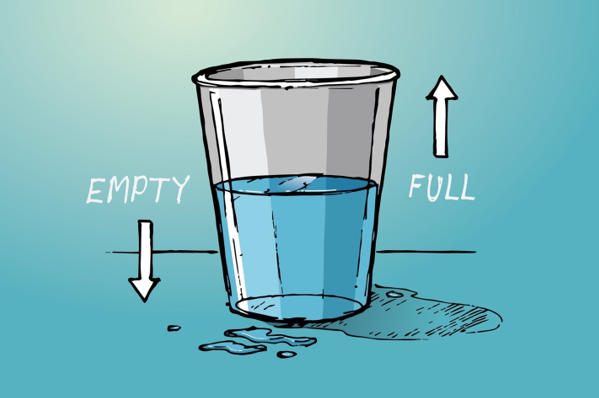
The Half-Glass Analogy: Understanding Mental Confusion
To understand the mental state of such individuals, consider a simple example.
Imagine a glass that is half-filled with water. If the goal is to fill the glass completely, the solution is simple: add more water.
A mentally healthy person thinks:
“There is half a glass. I will add the remaining half.”
But a person experiencing mental disturbance thinks differently:
- “How will I get the remaining water?”
- “What if I add too much and it overflows?”
- “What if I spill it and make a mess?”
- “What if I fail again?”
Instead of acting, they remain stuck in overthinking. They go in circles, unable to make decisions. Every action feels risky. Every choice feels dangerous.
This constant mental looping leads to exhaustion, negativity, and self-blame.
Decision Paralysis and Fear of Failure
Mental health disturbances often create decision paralysis. Even minor tasks require excessive thinking.
Such individuals:
- Think ten times before acting
- Fear criticism and scolding
- Believe they are incapable
- Assume negative outcomes before trying
This creates a negative environment around them, reinforcing their beliefs. Over time, they stop believing in their abilities altogether.
The Interview Example: When Fear Overpowers Reality
Consider the example of a well-educated individual preparing for an interview.
Objectively:
- They have the qualification
- They have studied
- They are capable
But mentally:
- “I am not eligible”
- “No one will select me”
- “I won’t reach the interview on time”
- “Something bad will happen on the way”
They imagine accidents, missed transport, rejection—before the interview even begins.
This is not logic.
This is conditioned fear.
The mind has already decided the outcome: failure.
Why Positivity Alone Does Not Work
Family members often try to motivate such individuals by saying:
- “It’s not a big deal”
- “You can easily do it”
- “Just be confident”
- “Try your best”
Although well-intentioned, these words often fail.
Why?
Because the person’s mind is already conditioned to reject hope. Their internal dialogue is stronger than external encouragement. Their belief system is fixed around “NO.”
This is why simply “being positive” does not cure mental health disorders.
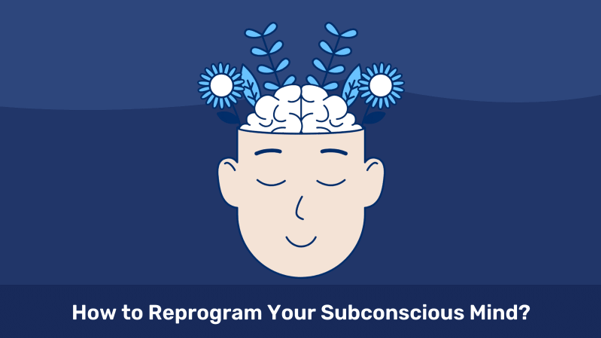
The Role of Counseling: Reprogramming the Mind
Mental health disturbances require consistent counseling, not medication alone.
Counseling works by:
- Repeatedly reinforcing positive logic
- Breaking negative thought cycles
- Gradually rebuilding confidence
- Teaching realistic thinking
- Offering emotional safety
There is no instant solution. The mind needs gentle but continuous hammering, just like reshaping metal.
Counseling is not force.
It is guidance.
It is patience.
No Medicine, Only Mind Training
In many such cases:
- Medication is not necessary
- No chemical intervention is required
The issue lies in thought conditioning, not chemical imbalance.
Through counseling:
- The person learns to challenge negative beliefs
- Fear-based assumptions are questioned
- Reality is slowly reintroduced
This process takes time, but it works.
Global Reality: You Are Not Alone
Globally, over 300 million people suffer from mental disturbances. This is not an isolated problem. It is a global health concern.
Many people are silently struggling, functioning outwardly but breaking inwardly. They exist, but they are not living.
This makes mental health awareness and counseling not a luxury, but a necessity.
Parenting Analogy: Handling Emotional Resistance
Consider a child demanding something expensive from their parents.
The child:
- Insists repeatedly
- Compares with others
- Becomes emotional
The parents do not scold. Instead:
- They explain with love
- They divert attention
- They find affordable alternatives
The child may not understand financial logic, but emotional balance is maintained.
Similarly, individuals with mental disturbances need:
- Love, not force
- Diversion, not argument
- Patience, not pressure

Therapeutic Redirection: The Key Strategy
The most effective therapy is mental redirection.
Instead of confronting fear directly:
- Shift focus
- Introduce small achievable actions
- Build success gradually
- Avoid overwhelming the person
This method protects emotional dignity while promoting healing.
Balancing Logic and Emotion
Mental health recovery is about balance.
- Not offending emotions
- Not reinforcing negativity
- Not forcing unrealistic expectations
Therapy respects both the mind and emotions.
Time, Patience, and Reversibility
Mental health disorders do not heal overnight. But they are reversible.
With:
- Time
- Consistent counseling
- Emotional support
- Correct guidance
Recovery is not only possible—it is achievable.